Saturday, August 12, 2006

Interesting Articles of the Day

Partially by design, partially due to its weak economy, Cuba is environmentally pristine.

A team of researchers in France has shown that energy-storage components called supercapacitors can be made from a remarkably cheap and humble material: baked seaweed.

Fight fire monkeys with monkeys. India’s Delhi Metro has hired a monkey to frighten off other monkeys from boarding trains and upsetting passengers.

A team of researchers propose what they say is a limitless, low-risk repository for carbon dioxide: seafloor sediments at depths and temperatures that would guarantee it would stay denser than the water above, and thus be permanently locked away.

Read More...

Why I Want to Move to Japan

It turns out that Nippon Telegraph and Telephone Corp. had just put a 1Gbps fiber-optic connection into the building, and fiber-to-the-home broadband is now available. For ¥4,200 ($36) per month, I can get a 100Mbps Internet line into my apartment and, if I don't care about losing my phone number, add telephone service for no charge.
$36 for 100Mbps! When does the next plane leave for Japan? Have I complained lately about how we are fighting them over there rather than building up our high-speed infrastructure over here? You could watch 5 HD channels at the same time with that speed. You could stream movies from Netflix. Instead I am paying $45 a month for 3Mbs.
Of the 23.3 million homes that had broadband connections at the end of March, 5.5 million had home-fiber connections. That's just under a quarter of all domestic broadband links, and the number is growing fast.
1/4 already have fiber. That's just not fair. Of course, Japan has 46.8 million households so for some reason only 1/2 of them have broadband connections. What is wrong with those other half?!

Update: According to this comment in digg:
Here in sweden we get 100Mbps fiber optics for about 43$/month, but its 100Mbit down/10Mbit up
Definitely time to move.

Read More...

Friday, August 11, 2006

Liquids on a Plane


Who the fuck brought this motherfucking beverage on this motherfucking plane?

Read More...

Thursday, August 10, 2006

Nanosolar to Build 430MW Fab

Nanosolar Inc., a global leader in solar power innovation, today announced that it has started executing on its plan to build a volume cell production factory with a total annual cell output of 430MW once fully built out, or approximately 200 million cells per year, and an advanced panel assembly factory designed to produce more than one million solar panels per year.

Nanosolar Inc., a global leader in solar power innovation, today announced that it now has $100 million in funding to take its breakthrough photovoltaic (PV) solar electricity technology into volume production.
$100 mil to build a 430MW Fab. I have been a fan of Nanosolar for a while and this is good news for them and the solar industry. To put 430MW in perspective, it is more than was all the solar panels produced in 2001 and it is 25% of the estimated 1,727 MW produced in 2005. So it is a big number.

I am still not clear how expensive the cells will be, but they talk as if they will be cheaper than anything currently on the market. In this National Geographic article they say they hope to sell them for $.50 a watt. If true, that blows away the competition. As I blogged previously a solar expert said that the price was $3/W in 2002 and expected a price of $1/W in 2012 and $.65/W in 2023. If Nanosolar is talking $.50/W anytime soon, they are 20 years ahead of this prediction. I can only hope that they live up to the hype.

via Nanosolar

Read More...

Sustainable Artifical Fertilizer

One of the knocks against using artificial fertilizer is that it requires fossil fuel energy in order to make it. I became curious, could artificial fertilizer be created in a sustainable manner?

I took a look at what it takes to make fertilizer. The main ingredient from an energy standpoint is ammonia which provides nitrogen in a form the plants can use. Currently the main ingredient for creating ammonia is natural gas. But the natural gas is used just as a way to create hydrogen. Hydrogen gas is then mixed with nitrogen gas to create ammonia.

As we all know from the hydrogen economy, hydrogen can be made in a sustainable fashion. You can use solar panels or wind mills to create electricity and then through electrolysis create hydrogen gas. So it is possible to create nitrogen fertilizer using solar or wind as your energy source. It is therefore possible to have sustainable artificial fertilizer. Maybe it would make a good product to sell at the gardening store for the environmentally conscious.

In the short run I don't think it makes a lot of sense to create fertilizer from these sources. Creating hydrogen from electrolysis is an inefficient process (and is a major reason why I am no fan of the hydrogen car). It makes more sense to use the electricity from solar and wind as, well, electricity. Using it to make hydrogen would then mean we would need more electricity from somewhere else, like, um, natural gas. So it would be better to just use the natural gas to create the hydrogen for now.

In the long run, when we have converted from fossil fuels to completely renewable resources then it makes sense. We could collect solar energy from deserts, turn that into electricity to create the hydrogen to create the fertilizer. We would be harnessing the sun's power in desolate areas to allow crops to grow better in fertile areas.

While I think we should use all the cow manure (and other organic sources) we can as fertilizer, I am skeptical that cow shit can scale to meet the fertilizer needs of the entire world. That is where the sustainable artificial fertilizer comes in.

Read More...

Organic Crops can use Pesticides?

I was under the impression that organic crops could not use any pesticides. So I was surprised to learn in the Wikipedia entry that they can in fact use pesticides as long as they are natural.

It is a common misconception that organic agriculture does not use pesticides. Some pesticides used on organic farms contain inorganic copper - and since copper is not biodegradable, this can lead to toxic copper accumulation in the soil. Approved organic pesticides are relatively less effective and must be applied at high levels (e.g. copper salts, sulfur) or must be applied frequently (e.g. pyrethrin). Other toxic pesticides that are approved for use by organic producers include ryania, Sabadilla, and rotenone.
This site explains more:
Contrary to what most people believe, "organic" does not automatically mean "pesticide-free" or "chemical-free". In fact, under the laws of most states, organic farmers are allowed to use a wide variety of chemical sprays and powders on their crops.

So what does organic mean? It means that these pesticides, if used, must be derived from natural sources, not synthetically manufactured. Also, these pesticides must be applied using equipment that has not been used to apply any synthetic materials for the past three years, and the land being planted cannot have been treated with synthetic materials for that period either.
As loyal Fat Knowledge readers are aware, I am not a big fan of the term "natural". First, natural is a vague term that can easily be manipulated. Second, lots of people equate it with healthy, and that is just not true. Hemlock is natural, but I sure ain't going to drink it. Spider venom is natural, but it sure isn't healthy for humans. Smoking tobacco leaves is natural, but it still causes cancer (and probably more than all "non-natural" items combined).

The question shouldn't be whether they are natural but how healthy they are for humans and the environment. And what is the verdict on "natural" pesticides?
When you test synthetic chemicals for their ability to cause cancer, you find that about half of them are carcinogenic.

Until recently, nobody bothered to look at natural chemicals (such as organic pesticides), because it was assumed that they posed little risk. But when the studies were done, the results were somewhat shocking: you find that about half of the natural chemicals studied are carcinogenic as well.

This is a case where everyone (consumers, farmers, researchers) made the same, dangerous mistake. We assumed that "natural" chemicals were automatically better and safer than synthetic materials, and we were wrong.

When you look at lists of pesticides allowed in organic agriculture, you find warnings such as, "Use with caution. The toxicological effects of [organic pesticide X] are largely unknown," or "Its persistence in the soil is unknown." Again, researchers haven't bothered to study the effects of organic pesticides because it is assumed that "natural" chemicals are automatically safe.
Great, so about 1/2 of natural pesticides are carcinogens, and rather than actually test them they get a free ride due to their natural status. Hopefully they will do some testing and figure out which pesticides are the healthiest for humans and animals in the surrounding area and use them. Until then, maybe we need a "Pesticide-Free" Organic label. :)

Read More...

Tuesday, August 08, 2006

State of the Blogosphere


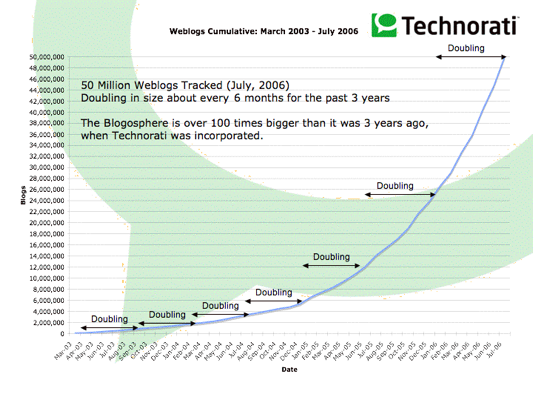
On July 31, 2006, Technorati tracked its 50 millionth blog.

Today, the blogosphere is doubling in size every 200 days, or about once every 6 and a half months.

As of July 2006, about 175,000 new weblogs were created each day, which means that on average, there are more than 2 blogs created each second of each day.

First off, the total posting volume of the blogosphere continues to rise, showing about 1.6 Million postings per day, or about 18.6 posts per second. This is about double the volume of about a year ago.
50 million blogs and 1.6 mil postings a day. Remind me, what was the world like before blogs?

via Sifry's Alerts

Read More...

Publish What You Pay

OK, final article on the oil curse for today.

It is one of the great paradoxes that countries rich in natural resources tend to have lower growth rates, more debt, worse governance and greater political unrest than their energy-poor neighbors. Vast petroleum profits without oversight allow corruption to flourish. Nigeria, for instance, has earned more than $250 billion for its oil in the last 25 years, yet remains mired in poverty. In Turkmenistan, gas revenues are deposited into a foreign account controlled by the president for life, Saparmurat Niyazov, international financial officials say. These kinds of governments do not make for stable energy suppliers.

It's easy to see how the Caspian Basin could follow the path of so many oil-producing countries in the Middle East and Africa, where a corrupt elite, not the population, benefits from oil resources. But Azerbaijan and Kazakhstan, where the oil wealth is just beginning to flow, and Iraq, where an oil regime is not yet established, could still get it right.

Azerbaijan and Kazakhstan have taken a positive first step by establishing oil funds, in which a portion of oil revenues are set aside for national development projects. Oil funds, however, succeed only with a system of checks and balances, coupled with transparency of information about oil revenues. Oil funds in Venezuela and in the Middle East are controlled by presidents or monarchs and have dwindled because of corruption and mismanagement.

In Iraq, as elsewhere, it is now up to the people to ensure that such oil funds are run transparently. Citizens' advisory councils modeled on those in Alaska's Prince William Sound might be a good forum to address the economic and environmental impact of petroleum development. Freedom of information laws should be passed and people trained how to use them. Any contracts about producing oil and gas should be disclosed. To demonstrate their commitment to fiscal transparency, oil funds should report information as recommended by the Extractive Industries Transparency Initiative, a British proposal whose tenets were endorsed by the Group of 8 countries earlier this year. The initiative aims to increase the transparency of payments made by energy companies to host governments by standardizing the templates used to report such payments.

The private sector must also do its part. The Publish What You Pay Campaign, which is sponsored in part by the Open Society Institute, has called on oil, gas and mining companies to reveal the extent of their payments to resource-rich countries. If this initiative is adopted widely, civic groups can track the allocation of their national income.
I like this Publish What You Pay Campaign. I wish they had a ranking of the best and worse oil companies in terms of implementing transparency. Then customers could choose to buy from those that are the best and put pressure on those that are low to improve.

via Open Society Institute

Read More...

Can Angola Break the Oil Curse?

More on the oil curse, this time with Angola.

The United States is expected to import 25 percent of its oil from Africa by 2015. Whether it will export democracy and stability in return is another question — one that will most likely be answered by the way in which American oil companies and the United States conduct business with countries like Angola.

Although Angola is finally at peace after decades of catastrophic civil war, its oil riches don't appear to be doing the country much good. Despite the production of almost a million barrels of oil a day, the vast majority of Angola's 10.7 million people live in grinding poverty. Government officials and oil executives live in villas behind security walls and barbed wire. But most Angolans — even here in Luanda, the capital — stay in crumbling cement-block huts without electricity or running water. Along the streets, children pick through mountains of roadside garbage while their parents hawk sundries from car to car or sell produce in the dirt alongside open sewers. The average life expectancy is around 40; the country has one of the highest infant mortality rates in the world.

The United States, eager to strengthen its ties with Angola, last year spent more than $100 million on the country's humanitarian emergency. It is expected to add $40 million more for 2003. But that's nothing compared to the oil revenues that disappear from government coffers each year. The International Monetary Fund has found that about $1 billion went unaccounted for each year in Angola from 1997 to 2001.
That doesn't look so good. Any suggestions on how to improve it?
In Angola, the United States has the opportunity to prove the agency wrong — if it takes several concrete steps. First, the United States should insist that its aid contributions be matched by funds from Angola's treasury. Angola has to invest in its own future.

Second, the United States should promote accountability in Angola by restoring aid to local pro-democracy and independent media organizations. (This aid, administered through the United States Agency for International Development, was reduced significantly three years ago.)

And third, the United States should compel American oil companies to make public what they pay to Angola for its oil. Right now, those payments are secret — as they are elsewhere in the world. As a result, no one really knows what the government earns from oil. That makes it impossible for Angolans to respond to their leaders' claims that oil revenues are being spent wisely. The Securities and Exchange Commission should therefore insist that publicly traded oil companies publish their payments to governments. If that happened, it could encourage real democracy.
I think those sound pretty good. Increase transparency, make sure the money goes to the people and help the pro-democracy forces. We will see how well that works out.

via International Reporting Project

Read More...

Russia and the Oil Curse

A nice Op-Ed about Russia and how its oil wealth will probably lead to more bad than good for the Russian people.

Oil and gas now account for roughly 20 percent of Russia's economy, 55 percent of all its export earnings and 40 percent of its total tax revenues. Russia is the world's second largest oil exporter after Saudi Arabia, and its subsoil contains about 30 percent of the world's gas reserves.

But what's good for the energy markets is not necessarily good for Russia. When oil revenues flood a nation that has a weak system of democratic checks and balances, dysfunctional politics and economics ensue. A strong democracy and an effective public sector help explain why oil has not distorted Norway the way it has Nigeria or Venezuela. A lot of oil, combined with weak public institutions, fuels poverty, inequality and corruption. It also undermines democracy.

The economic effects are more noticeable. A country whose economy relies mostly on oil exports inevitably has an exchange rate that encourages imports and hinders exports. Such an imbalance favors oil at the expense of other sectors, like agriculture and manufacturing, as their products become more expensive abroad.

And while oil generates export revenues and taxes for the government, it creates few jobs. Despite its enormous economic weight, Russia's oil and gas industry employs just two million workers out of an economically active population of 67 million. Also, since the price of oil is volatile, petrostates suffer constantly from boom-bust cycles. The busts leave in their trail banking crises and public budget cuts that hurt the poor disproportionately.

Even the tax revenue generated by oil is a mixed blessing. Petrostates commonly suffer from a narrow tax base. In Russia, for example, the 10 largest companies account for about half of total tax revenues.
It amazes me that oil and gas industries generate 20% of GDP but only 2% of employment.

via The New York Times

Read More...

Monday, August 07, 2006

Neuroeconomics


Cool neuroeconomics study where they take a look at peoples' brains as they make economic decisions.

De Martino and colleagues asked 20 men and women to undergo three 17-minute brain scans while being asked to gamble — or not — with an initial pot of English pounds worth about $95. When told they would "keep" 40% of their money if they didn't gamble, the volunteers chose to gamble only 43% of the time. Told they could "lose" 60% of the money if they didn't gamble, they rolled the dice 62% of the time.

Their chances of winning the money were carefully explained beforehand, and participants knew the odds were identical. But the framing effect still skewed their decisions significantly.

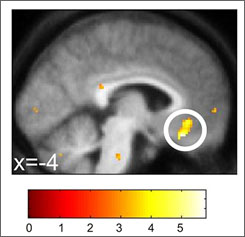
The brain images revealed the amygdala, a neural region that processes strong negative emotions such as fear, fired up vigorously in response to each two-second (on average) gambling decision. Where people resisted the framing effect, a brain region connected to positive emotions such as empathy, and another that activates whenever people face choices, lit up as well, seeming to duke it out over the decision.
via USA Today

Read More...

MyLifeBits

In 1998 Bell, a senior researcher at Microsoft, began digitally capturing his entire life for a project he calls MyLifeBits. First, he scanned his old photographs, research documents and notes. He began recording his meetings and phone calls and cataloguing his new photos and movies he saw. Every e-mail exchange he had was digitally archived, and he started using the company's prototype SenseCam, which he wears around his neck, to automatically snap photos throughout the day.

Bell now documents about one gigabyte of information every month, all of which is stored in a searchable database on his PC. His is a highly manual process, but he expects that in as few as 15 years it will be common to carry nearly all our 'memories' around with us in a single device that will automatically record the sound and video of our daily activities, creating an inventory of the conversations we have, the faces we see and the articles we read. That data would be tied to communications that are already tracked electronically, like e-mail and event calendars, as well as TV shows, movies and other media we take in. The end result: on-demand total recall.

The biggest challenge to Bell's vision is developing the software required to search your memory database effectively.
I like it.

I was thinking a while back how it is now possible to have a small camera in your glasses that would record everything you see during the day and then save it to an iPod like device on your side. At the current iPod video resolution you can get about 2.5 hrs per GB. To save 15 hrs a day would be 6GB. Hard drive space is about 2 GB per $1. So it would cost $3 a day to save everything that you see. For the price of a latte a day, you can now record your entire life.

via LiveScience.com

Update: I also found this BBC article about an HP project to embed a camera in a pair of sunglasses.

Read More...

Saturday, August 05, 2006

What We Work for Now

Interesting look at how spending patterns have changed over 100 years in the US.

In 1901, the Bureau of Labor Statistics reported that in major industrial cities, the biggest expenditure item for families was food — half of spending in low-income families and a third in more affluent ones. In 1999, food took only 15 percent of household spending, and more than a third of that spending was for food prepared away from home.

Something similar has happened with clothing. In 1901 it took 10 to 15 percent of the family budget, and now it takes only 5 percent.

The big growth category is transportation. In the earliest studies of consumption, transportation wasn't even a separate category; it took only 1 or 2 percent of spending. But then came the automobile, and now we devote more than 20 percent of our spending to transportation.
Food goes from 50% to 15% (though this masks the subsidies to the agricultural system citizens pay through taxes), clothing goes from 15% to 5%, and transportation from 2% to 20%.

And yet, the more things change, the more they stay the same.
In 1901, 80 percent of spending went for food, housing and clothing. In 1999, 81 percent of spending went for food, housing, clothing, transportation and health care.
via Redefining Progress

Read More...

Friday, August 04, 2006

Why I Don't Want a WiFi Camera


A while back I was listening to a technical pundit lament about how cameras can't wirelessly connect to PCs to download pictures. I think it was Eric Schmidt of Google at Charlie Rose, maybe this one, or this one, or this one (too bad Charlie doesn't have free online transcripts or I would look it up).

I thought to myself, yeah wireless is cool, but it automatically brings up new security issues. A wireless camera is now vulnerable to viruses and hacking. For most people using a cable isn't a big deal and the value of wireless might be less than the new security worries that come up. And who thinks that a camera company would know anything about wireless security in order to set it up properly?

And today, my skepticism paid off. Engadget reports:

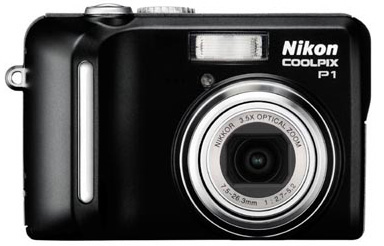
According to Informit, in addition to sending your vacation pics flying through the air, the P1 can also open up your PC to a whole range of attacks, including DoS attacks and infected JPGs and executables, not to mention allowing others to potentially intercept your photos. The bad news, if that wasn't bad enough, is that there apparently isn't any easy fix outside just not installing Nikon's WiFi software on your PC -- thus killing the phone's only wireless functionality.
Until they get these security issues worked out I think I will stick with the cabled version.

Read More...

An Oil Bubble?

I have a hard time believing oil and gasoline prices are high (and profits large) due to oil company price gouging. Oil is a world wide commodity that is traded on a market. Regardless, it seems to be a popular opinion and both those on the left (Maria Cantwell) and right (Bill O'Reilly) are taking advantage of it politically.

But, given that it is a market, what we might be seeing is an oil bubble created by speculators. Instead of looking into price gouging, I wish congress would look into this.

Robert Samuelson of the Washington Post writes this:

"Speculation" has a bad image. It suggests financial sharpies plundering everyone else. The reality is often the opposite: financial innocents following the latest fad to ruin. That happened with tech stocks. The oil picture is murkier. The big "speculators" are institutional investors -- pension funds, hedge funds (pools of loosely regulated funds) and investment banks. They have purchased oil futures contracts and, in effect, bet that prices six months or a year out will exceed present prices. Since 2002, investment in futures contracts may have quintupled to more than $100 billion, estimates energy economist Philip Verleger Jr.

Oil inventories for industrial countries "are at a 20-year high." Spot prices rise because there's less oil on the market.

It's unclear how much this sort of speculation has increased prices, if at all. The report mentions estimates ranging from $7 to $30 a barrel.
We have oil inventories at a 20-yr high, $100 billion in speculation and increased prices of anywhere from $7-$30 a barrel. That looks like evidence that there is speculation and it might be a major cause of the price increase in oil.

He also wonders why the large outrage at prices (which I have also wondered):
Even at $3 a gallon, it costs Americans only about 4 percent of their disposable income, reports economist Nigel Gault of Global Insight. The same is true globally. At $70 a barrel, global crude sales would total about $2.2 trillion annually; that's still a tiny share of the $50 trillion world economy.
The Economist also took a look at the issue:
Some analysts believe that investors have inflated a speculative bubble in commodities. Hedge funds' investments in energy markets rose from $3 billion in 2000 to about $90 billion last year, according to the International Energy Agency, a think-tank.

It is hard, concedes Frédéric Lasserre, the author of Société Générale's report, to translate nebulous fears about future supply into prices. In the long run, the price of any given commodity should revert to the cost of producing an incremental unit of supply. By that measure, Mr Lasserre calculates, oil is overvalued by 50%, and zinc and copper by almost 40%. In the short term, the level of stocks plays an important part. But again, relative to the historical relationship between stocks and prices, Mr Lasserre reckons copper is 148% too dear; zinc, 122%; nickel, 70%; and oil, 49%.
They come to a similar conclusion and see oil being 49% overvalued compared to the marginal cost of production.

In general bubbles are neither good for customers or investors in the long run. Half of me wants the government to get involved and try and reduce the amount of speculation. The other half thinks getting the government involved will only make the situation worse. But if politically we need to blame someone, I wish we would go after the speculators rather than the oil companies.

Read More...