Tuesday, October 09, 2007

FishPhone

So let's say you're out for a night on the town, getting ready to order dinner, but aren't sure if you should eat the shrimp or not. You check your wallet, but the handy Monterey Bay Acquarium Seafood Watch isn't there; oh no! What to do? Now you don't have to worry, as the guide is available as a text-messaging service aptly named FishPhone.

Just text 30644 on your cell phone with the message "FISH" and the fish you want to know about; a matter of seconds later, you'll have an answer about the relative sustainability of your potential meal. If mobile web-browsing is more your game, FishPhone has you covered, as does the Monterey Bay Acquarium.
Sounds good to me. Also handy when you are grocery shopping and trying to figure out which fish to buy.

via TreeHugger

Read More...

Obama's Energy Proposal

Obama has released his Energy Proposal and it looks really good. Climate Progress and Grist list the highlights:

  • Implement an economy-wide cap-and-trade program to reduce greenhouse gas emissions to the level recommended by top scientists to avoid calamitous impacts. [Obama will require carbon emissions to be “80 percent below 1990 levels by 2050” through cap & trade (with 100% allowance auction!) starting with a mandate “of reducing emissions to 1990 levels by 2020.”]

  • Invest $150 billion over the next ten years to develop and deploy climate friendly energy supplies, protect our existing manufacturing base and create millions of new jobs.

  • Dramatically improve energy efficiency to reduce energy intensity of our economy by 50 percent by 2030.

  • Reduce our dependence on foreign oil and reduce oil consumption overall by at least 35 percent, or 10 million barrels of oil, by 2030

  • Make the U.S. a leader in the global effort to combat climate change by leading a new international global warming partnership.

  • 100% auction of cap-and-trade credits. This is a home run, a real act of standard-setting boldness (the kind that Obama always promises but rarely delivers). The green community should immediately use it to push Clinton and Edwards into making the same commitment, insuring that it's the new baseline for any cap-and-trade program.

  • Smart investment. The revenue from auctions will be considerable, up to $50 billion a year, and Obama's smart about putting it to work, dividing it between energy R&D, protections for low-income workers, and market deployment of existing clean tech.

  • A focus on efficiency. Clearly Obama gets that efficiency is the easiest route to emission reductions, and he's got a set of thoughtful, detailed initiatives to make it work.

While I think a carbon tax is simpler and less likely to be gamed than a cap-and-trade program, this is pretty good, especially because it is auctioned off rather than given away. I wonder how much revenue that will bring in? I think I read somewhere around $30 billion which then could be used to pay for the R&D he is proposing.

This proposal is similar in many respects to my Gas Tax + Grand Challenges in Renewable Energy Bold Idea.

I like his idea to create a Clean Tech Deployment VC Fund.
The Clean Technologies Deployment Venture Capital Fund will be modeled on the highly-successful Central Intelligence Agency In-Q-Tel program. In-Q-Tel is a non-profit, independently-managed venture capital fund led by seasoned venture capital professionals to develop new intelligence technologies for the CIA. The first five years of In-Q-Tel funding led to 22 new technologies being used in 40 government programs.
While the proposal is good, I wonder if Obama is elected and this were to go to congress, just what kind of legislation would get passed and whether the parts I like about this would make it through.

Read More...

Interesting Articles of the Week

Is 2007 the year of the solar stock?

Study in rats suggests long-term, moderate consumption of alcohol improves recall of both visual and emotional stimuli.

MIT students invent bio fuel cell that generates electricity from leaves and grass for $2.

Yahoo Exec on the future of music and Yahoo Music.

Military sees big decline in black enlistees.

Read More...

Sunday, October 07, 2007

Venter Creates Artificial Life

Craig Venter, the controversial DNA researcher involved in the race to decipher the human genetic code, has built a synthetic chromosome out of laboratory chemicals and is poised to announce the creation of the first new artificial life form on Earth.

The Guardian can reveal that a team of 20 top scientists assembled by Mr Venter, led by the Nobel laureate Hamilton Smith, has already constructed a synthetic chromosome, a feat of virtuoso bio-engineering never previously achieved. Using lab-made chemicals, they have painstakingly stitched together a chromosome that is 381 genes long and contains 580,000 base pairs of genetic code.

The DNA sequence is based on the bacterium Mycoplasma genitalium which the team pared down to the bare essentials needed to support life, removing a fifth of its genetic make-up. The wholly synthetically reconstructed chromosome, which the team have christened Mycoplasma laboratorium, has been watermarked with inks for easy recognition.

It is then transplanted into a living bacterial cell and in the final stage of the process it is expected to take control of the cell and in effect become a new life form. The team of scientists has already successfully transplanted the genome of one type of bacterium into the cell of another, effectively changing the cell's species. Mr Venter said he was "100% confident" the same technique would work for the artificially created chromosome.
via The Guardian

Read More...

Chances


via Top 40 Demotivational Posters

Read More...

Scientists May Have Found Appendix’s Purpose

The function of the appendix seems related to the massive amount of bacteria populating the human digestive system, according to the study in the Journal of Theoretical Biology. There are more bacteria than human cells in the typical body. Most of it is good and helps digest food.

But sometimes the flora of bacteria in the intestines die or are purged. Diseases such as cholera or amoebic dysentery would clear the gut of useful bacteria. The appendix’s job is to reboot the digestive system in that case.

The appendix “acts as a good safe house for bacteria,” said Duke surgery professor Bill Parker, a study co-author.

Also, the worm-shaped organ outgrowth acts like a bacteria factory, cultivating the good germs, Parker said.
Interesting. I wonder how it determines which are the good bacteria and which are the bad?

So, why is it no big deal if you have your appendix removed?
That use is not needed in a modern industrialized society, Parker said. If a person’s gut flora dies, they can usually repopulate it easily with germs they pick up from other people, he said.
I don't think I want to know how exactly we get those germs from other people.

via MSNBC

Read More...

Saturday, October 06, 2007

Is Great Happiness Too Much of a Good Thing?

Americans report being generally happier than people from, say, Japan or Korea, but it turns out that, partly as a result, they are less likely to feel good when positive things happen and more likely to feel bad when negative things befall them.

Researchers had found that people need a certain ratio of positive to negative events to be happy -- couples, for example, seem to need about three times as many positive interactions with each other as negative interactions to feel satisfied with the relationship. A variety of therapists have focused on trying to increase the ratio of positive to negative events in their clients' lives.

But according to the new study, led by University of Virginia psychologist Shigehiro Oishi, people who report a large ratio of positive to negative events also seem to derive diminishing returns from additional happy events -- and ever larger adverse effects when they encounter negative events.

By contrast, Oishi found that even though Japanese people were less happy overall than Americans, they needed only one positive event to regain their equilibrium after experiencing a negative event. European Americans needed two positive events on average to regain their emotional footing.
via Washington Post

Read More...

Record Your Life Update

I have written before on the ability to record your entire life. Two quick updates.

First, some new cool glasses you can use.

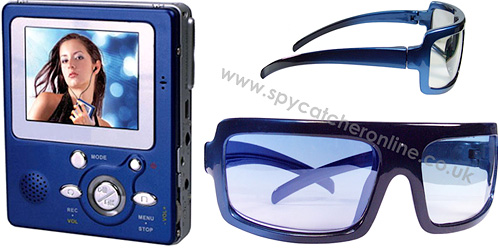
Video cameras embedded in a pair of glasses are not exactly new but this pair takes advantage of the current trend in oversized sunglasses to effectively hide its video recording capabilities. In addition the glasses include a pocket-sized video recorder that not only captures the secret footage onto swappable SD cards but also allows you to immediately watch it over and over.

The camera is capable of recording in both NTSC and PAL but in reality you’re only looking at about 510×492 effective pixels for NTSC and 500×582 for PAL. Not exactly hi-def quality but it’s a lot better than most web videos. Of course the Spycatcher website claims the sunglasses are ideal for investigative journalists, private investigators and ‘mystery’ shoppers but we all know what kind of clientele will be buying these.

So whether you work for NBC Dateline’s To Catch A Predator or have just been featured on the show you can grab a pair of these sunglasses from Spycatcher for about $1,400.
Second, justin.tv will host your life video on their site for free. You no longer have to worry about storage costs, or paying for a webserver to allow access to your videos. How can they do this?
In an interview with NewTeeVee, Seibel explained that financial backing was just part of the equation, as creating a homegrown version of Flash Media Servers floating on Amazon EC2 dropped costs from roughly $0.36 per user hour to less than a penny.
Wow, less than 1¢ per hour to host. That is amazing.

Read More...

Genetic Eye Color Test

I was reading this interesting Wired article on how DNA can be used to determine the race of an individual when I came across this juicy nugget:

RETINOME which predicts iris color with 96 percent accuracy is on the market and was used very effectively in the Napa murder case.
The idea of determining race from DNA is old hat, but I had no idea that they now could determine eye color. In fact, I was under the impression that eye color was determined by more than genes and a genetic test wasn't really possible. Of course, I am not quite sure what 96% accuracy means. Does that just check for simple categories like blue, green and hazel? Or does it take into account the more complex looking eye color patterns as seen in the photo?

This DNAPrint Genomics company's DNA Witness product is pretty impressive, but it looks to be much more so in the future.
He has identified the gene sequences associated with height, and has compiled a database of 5000 digital photographs of people with almost every racial ancestry combination -- which, one day, he says could allow him to construct a physical portrait of a DNA donor, including melanin content, skin color or eye color.
Wow, so now the CSI team will be able to determine height, race, skin color, and eye color (hmm, no hair color?) from DNA left at the scene. They practically can render a sketch of the perpetrator just from DNA.

Of course, I figure that in a generation we will all have our DNA put into a public database when we are born so this won't be necessary.

Read More...

Thursday, October 04, 2007

Americans' Bodies Aren't the Only Thing Getting Heavier

Read More...

Wednesday, October 03, 2007

Genetics and the Ultimatum Game

But a study by David Cesarini, a Ph.D. student in MIT's Department of Economics, and by colleagues in Sweden indicates that there is a genetic component to people's perception of what is fair and what is unfair.

The paper, to be published in the Oct. 1 advanced online issue of the Proceedings of the National Academy of Sciences, looked at the ultimatum game, in which a proposer makes an offer to a responder on how to divide a sum of money. This offer is an ultimatum; if the responder rejects it, both parties receive nothing.

Because rejections in the game entail a zero payoff for both parties, theories of narrow self-interest predict that any positive amount will be accepted by a responder. The intriguing finding in the laboratory is that responders routinely reject free money, presumably in order to punish proposers for offers perceived as unfair.

To study genetic influence in the game, Cesarini and colleagues took the unusual step of recruiting twins from the Swedish Twin Registry, and had them play the game under controlled circumstances. Because identical twins share the same genes but fraternal twins do not, the researchers were able to detect genetic influences by comparing the similarity with which identical and fraternal twins played the game. The researchers' findings suggest that genetic influences account for as much as 40 percent of the variation in how people respond to unfair offers. In other words, identical twins were more likely to play with the same strategy than fraternal twins.
Some days I wonder if there is any economic researchers do anything other than test people playing the ultimatum game.

This is interesting, but these days just testing for a genetic influence seems quaint. Lets take a DNA sample from these people, and figure out which genes might be responsible. It has already been shown that testosterone levels influence the ultimatum game, so maybe those genes have something to do with it.

via CogNews

Read More...

Interesting Articles of the Week

Suicide-gene test could spawn customized drugs.

Robotic therapy tiles: playing your way to health.

Freeing the dark data of failed scientific experiments.

Quebec introduces a carbon tax.

Scientist invents computer pillow to stop snoring.

Read More...

Tuesday, October 02, 2007

Does Anyone Read Nutritional Labels?

I am a habitual reader of nutritional labels, but I have been curious whether my actions are an abnormality.

WN: What about food labels? Are they helpful?
Wansink: In every study we do, regardless of what focus is, there's about 15-20 percent of the people who look at the food label and read it and process it accurately. Of course, 70 percent of people say they do, but they don't.
Looks like I am in the minority.

I have been calling for social and environmental labeling to be added to products. If they were, I bet the same 15-20% of people would actually read them.

via Wired

Read More...

Sony 3-mm Thin XEL-1 OLED TV

Sony was all about showing off their new turbo-thin XEL-1 OLED TV at CEATEC today, and we have to hand it to them, this thing is kind of mind-blowingly thin. But once you do check it out, you may just find its gorgeous, bright pseudo-HD, 1m:1 contrast ratio picture hypnotizes you from remembering its ridiculously high ¥200,000 (about $1700 US) price and piddly 11-inch size.
Check out its thinness in this video.

What do you figure, about 5 years before these super thin OLED TV's make it to 42" and another 5 years before the price is reasonable? Oh, 2017 you can't come soon enough.

via Engadget

Update:
Why the sudden flurry of interest in OLEDs? The answer has a lot to do with expiring intellectual-property rights. Some 6,500 patents have been granted for OLED inventions since work first began on them more than 25 years ago. Of those, only 20 or so are considered real cornerstone patents—and Kodak owns no fewer than 13 of them.

Kodak’s breakthrough was to use small organic molecules sandwiched between negative and positive electrodes to produce visible light at a much lower voltage than ever before. That was in 1987.

Twenty years on, two of Kodak’s key patents on small-molecule OLEDs have now expired, and a number of others are coming to the end of their 20-year lifespans. Realising that its royalty revenues were about to run out, Kodak has been hurriedly signing licensing deals with as many screen-makers as possible.
So it looks like any cool TV R&D that is being performed now won't really be commercialized until the patents run out 20 years from now. I think they really need to take a look at patent length. 20 years is an eternity in technology. I think a 5 year window might allow for more innovation while still giving those that commercialize their technology a financial benefit.

Read More...

Sharp Shows Off Multi-Touch Optical Scanning Portable LCD

Today at CEATEC Sharp showed off its optical scanning LCD -- a 3.5-inch 320 x 480 portable display with an optical scanner integrated into each pixel, making the screen capable of scanning business cards and other visual information placed on its face. The pixel-integrated optical scanning technique is also able to be used to enabled more robust multi-touch interfaces; instead of a touch-sensitive film (like most touchscreen phones) or a capacitive display (like on the iPhone), these future Sharp displays literally constantly scan for finger touches, enabling multi-touch input with all five fingers simultaneously.
Pretty slick to allow the screen of a cellphone to also be a scanner. I think this would be good for being able to scan the barcodes of items while at a store to get additional information on the item such as environmental impact or comparison pricing.

via Engadget

Read More...